
Search Engine Optimization (SEO) is a crucial element of digital marketing, but managing it manually can be time-consuming and inefficient. SEO automation platform leverage artificial intelligence, machine learning, and powerful analytics to help businesses optimize their strategies with minimal effort. These tools assist in keyword research, competitor analysis, technical SEO audits, and backlink tracking—making SEO workflows faster and more effective.
To help you choose the best solution, we’ve compiled the top 10 SEO automation platforms that can enhance your search rankings while saving time and effort. Each tool includes an in-depth description, pros, and cons to help you determine the right fit for your needs.
1. Ahrefs

Ahrefs is one of the most powerful SEO automation platforms, offering a suite of tools for keyword research, site audits, rank tracking, and backlink analysis. It features a comprehensive database with millions of keywords and an extensive backlink index, making it ideal for monitoring competitors and optimizing your SEO strategy. The Site Explorer tool helps analyze competitors’ traffic sources, while the Content Explorer identifies trending topics for content marketing.
Pros:
- Advanced backlink and keyword analysis.
- Excellent competitor insights.
- Regular database updates for accurate results.
Cons:
- Expensive for small businesses.
- Steep learning curve for beginners.
2. SEMrush
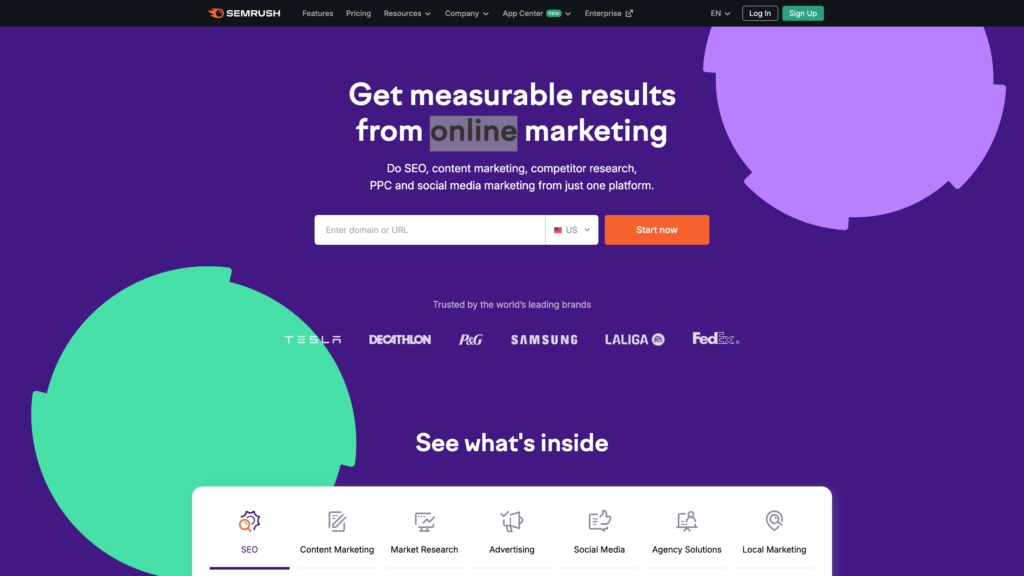
SEMrush is a complete SEO automation platform that integrates SEO, PPC, social media, and content marketing into a single tool. It provides robust keyword research capabilities, domain analytics, and competitive analysis features. SEMrush’s SEO Toolkit automates rank tracking, backlink monitoring, and technical SEO auditing, making it an all-in-one solution for digital marketers and SEO professionals.
Pros:
- Comprehensive competitor and keyword research.
- Strong automation features for SEO and PPC.
- Excellent reporting and visualization tools.
Cons:
- Expensive for startups.
- The interface can be overwhelming for new users.
3. Screaming Frog SEO Spider
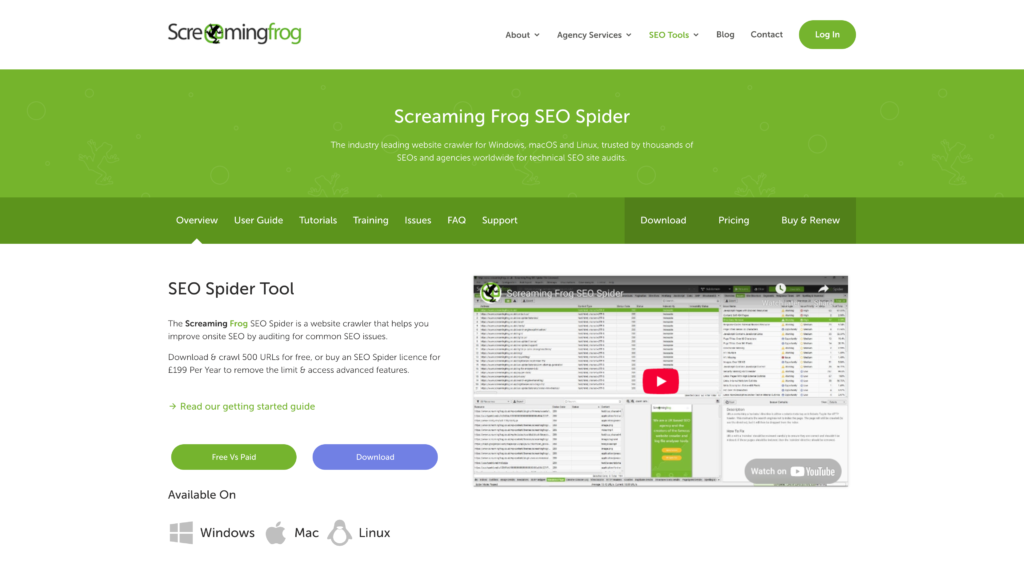
Screaming Frog is a technical SEO tool that automates website crawling to identify common SEO issues, such as broken links, duplicate content, and missing meta tags. Its real-time analysis helps detect issues that impact search rankings, making it a favorite among SEO professionals focused on site health and optimization.
Pros:
- Free version available for small-scale audits.
- Provides in-depth site structure analysis.
Cons:
- Limited cloud-based functionality.
- Not beginner-friendly due to its technical nature.
4. Moz Pro
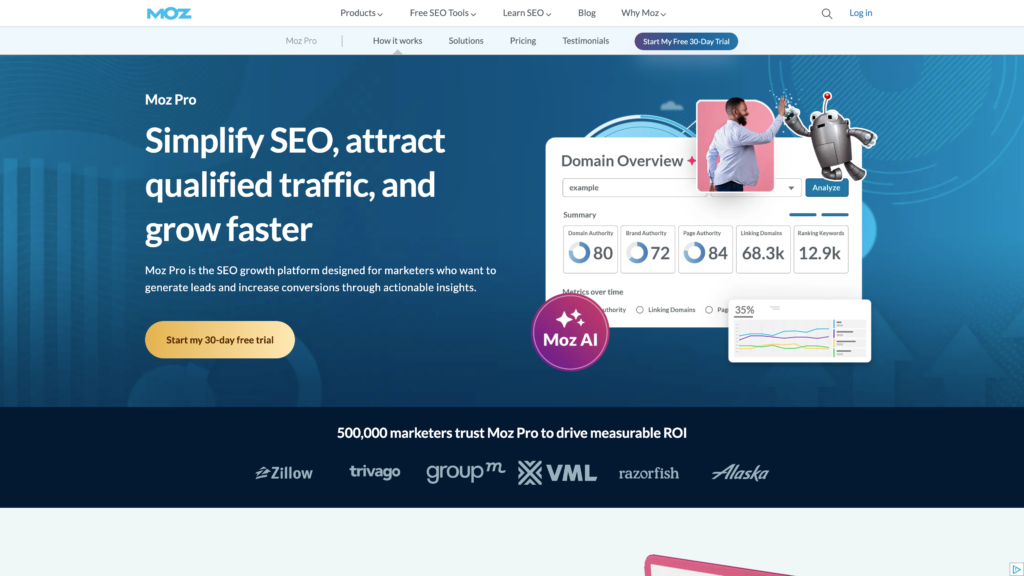
Moz Pro is a user-friendly SEO automation platform that offers features like keyword research, site audits, rank tracking, and link analysis. It provides actionable insights through its Domain Authority (DA) scoring system, which helps businesses measure the strength of their website against competitors. The Page Optimization tool offers on-page SEO recommendations for content improvements.
Pros:
- Easy-to-use interface with detailed SEO metrics.
- Strong backlink and domain authority tracking.
Cons:
- Some keyword data is less accurate than competitors.
- Limited advanced automation options.
5. Surfer SEO

Surfer SEO is an AI-powered tool designed for content optimization and on-page SEO automation. It analyzes top-performing content for a given keyword and provides real-time recommendations on word count, keyword density, and content structure. With Google Docs integration, it streamlines content writing for higher search rankings.
Pros:
- AI-driven content analysis for better optimization.
- Integrates seamlessly with Google Docs and WordPress.
Cons:
- Limited free options.
- Requires a learning curve to use effectively.
6. WebFX SEO Checker
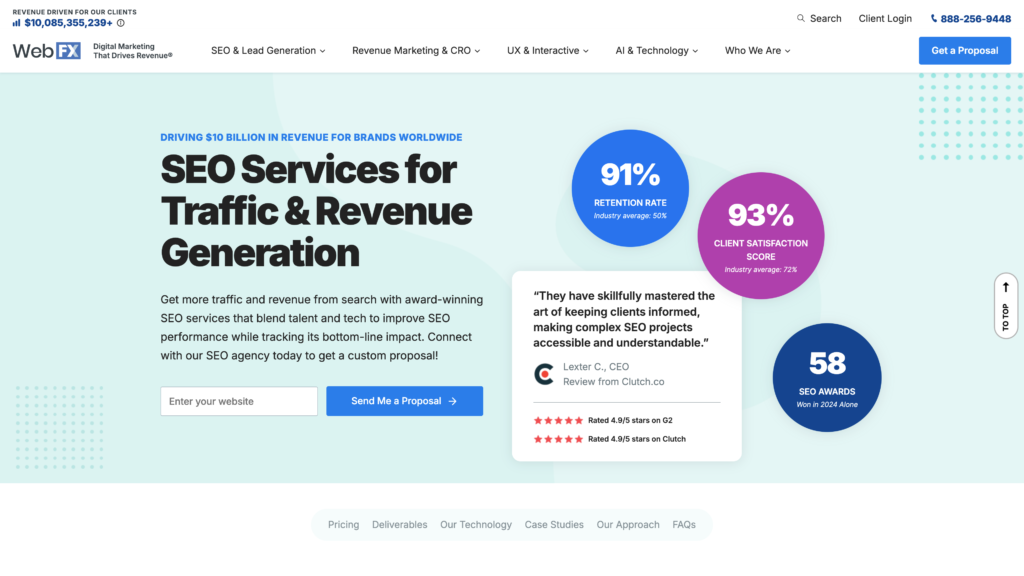
WebFX SEO Checker is a free SEO auditing tool that evaluates website performance, keyword rankings, and site speed. It provides actionable recommendations for on-page SEO, security enhancements, and mobile-friendliness, making it an excellent tool for businesses looking to improve their search presence.
Pros:
- Completely free and beginner-friendly.
- Fast insights for quick SEO improvements.
Cons:
- Lacks advanced competitor analysis features.
- Not a full-featured SEO suite.
7. Google PageSpeed Insights
Google PageSpeed Insights is a performance-focused SEO tool that analyzes website speed and provides optimization suggestions. Since page speed is a ranking factor, this tool helps improve Core Web Vitals, ensuring better user experience and search rankings.
Pros:
- Free and backed by Google.
- Offers actionable insights for speed optimization.
Cons:
- Limited to page speed analysis.
- Doesn’t cover other SEO aspects like keyword tracking.
8. Majestic SEO
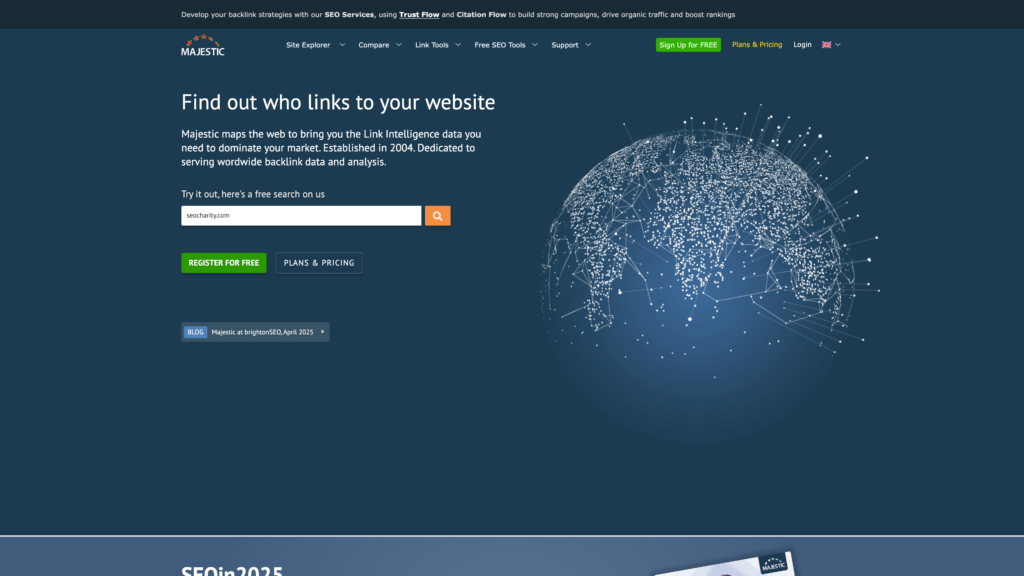
Majestic SEO specializes in backlink analysis and domain authority tracking. It provides detailed reports on link profiles, trust flow, and citation flow, making it a valuable tool for link-building strategies. The Site Explorer feature allows users to track their backlink history and analyze competitors’ links.
Pros:
- Extensive backlink database for link-building.
- Provides trust and citation flow metrics.
Cons:
- Limited keyword research features.
- Interface feels outdated compared to competitors.
9. BuzzSumo

BuzzSumo is an SEO and content marketing automation platform that helps identify trending topics and track content performance. It enables businesses to analyze competitors’ content strategies and find influencers for outreach campaigns. The backlink tracking feature also helps in link-building efforts.
Pros:
- Great for content research and marketing strategies.
- Helps with backlink outreach and engagement tracking.
Cons:
- Full features require a paid subscription.
- Lacks in-depth keyword tracking.
10. Google Search Console
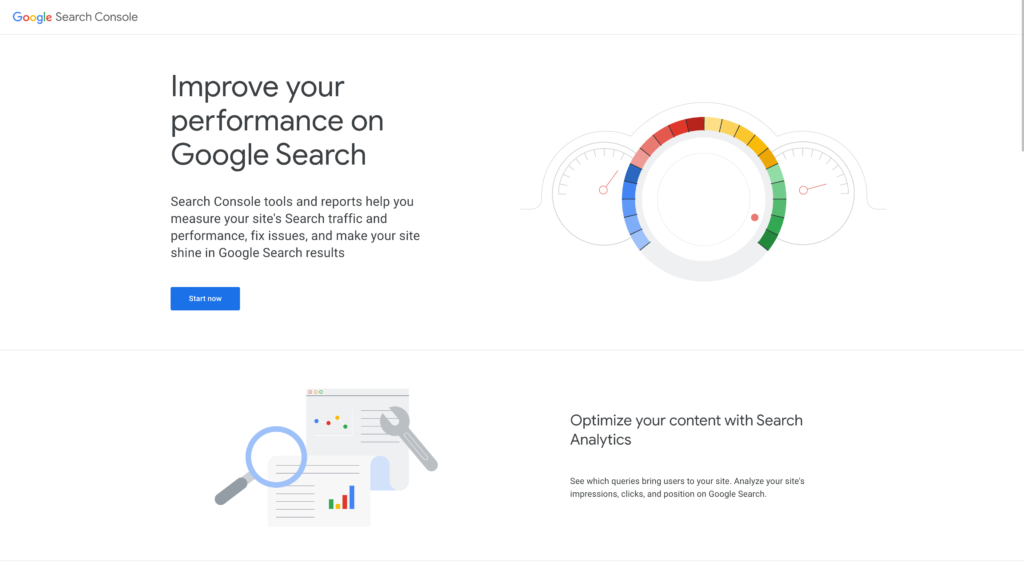
Google Search Console is an essential SEO monitoring tool that provides direct insights from Google on how a website performs in search results. It helps with indexing issues, keyword performance tracking, and mobile usability insights, making it a must-have for any website owner.
Pros:
- Free and easy to use.
- Provides valuable search performance data.
Cons:
- Limited automation features.
- Requires manual setup for some insights.
Conclusion
Choosing the right SEO automation platform depends on your business needs and budget.
- If you’re looking for comprehensive SEO insights, Ahrefs and SEMrush offer top-tier solutions.
- For technical SEO, Screaming Frog and Google PageSpeed Insights provide in-depth audits.
- Content marketers can benefit from Surfer SEO and BuzzSumo.
- While Google Search Console remains a must-have for website monitoring.
If you’re looking for expert assistance in SEO strategy, automation, and content marketing, consider hiring Iron Dove for data-driven SEO solutions.
Contact us today to optimize your workflow and boost your search rankings!